De Nederlandse Vereniging voor Logica & Wijsbegeerte der Exacte Wetenschappen



Logic at Large Lecture 2026
The Dutch Association for Logic and Philosophy of the Exact Sciences is pleased to announce its 2026 Logic at Large Lecture. Professor Susanne Bobzien (Oxford and Princeton) will deliver a lecture entitled 'Stoic Propositional Logic — more relevant than you think'. The lecture will take place online on 23rd November at 5pm CET.
The event will be held online and is open to all. No registration is required, simply join via this Zoom link.
About the Logic at Large Lecture Series
The Logic at Large Lectures are public online lectures intended for a general audience, which the Association organizes every year. The lectures are delivered by distinguished logicians and philosophers of the exact sciences.
About the speaker
Susanne Bobzien is Professor Emerita of Philosophy at Oxford University (All Souls) and Visiting Research Fellow at Princeton’s Philosophy Department. Previously, she was Professor of Philosophy at Yale University. She holds a doctorate from the University of Oxford and a Magister Artium from the University of Bonn. Professor Bobzien is a Fellow of the British Academy and a Corresponding Member of the International Academy of Philosophy of Science.
Professor Bobzien works in both contemporary philosophy and the history of philosophy. Her main interests include logic and the history of logic (incl. Frege), ancient philosophy, vagueness and paradoxes, and determinism, freedom, & moral responsibility. Her best-known work includes her influential book Determinism and Freedom in Stoic Philosophy and her groundbreaking work on stoic logic and its influence on the development of modern logic.
The organizers: Luca Incurvati and Benedikt Löwe, on behalf of the VvL.
Past Logic at Large Lectures
|
October 8 2025 Samson Abramsky (University College London) The Logic of Quantum Paradoxes It is often and justifiably said that quantum mechanics is our most successful physical theory. At the same time, fundamental features of quantum mechanics lead to the borders of paradox, and rule out any reconciliation with the world-view of classical physics. Moreover, it is these very paradoxical and non-classical features which lie at the heart of quantum advantage in information processing and computational tasks. In this talk, we will explain the logical structure of these non-classical and paradoxical features. They will appear as "logical twisting", so that e.g. Liar cycles correspond to Moebius strips, and describe non-local physical phenomena. We find a meeting point of Logic, Topology, Probability, and Physics. |
|
| June 17 2024 Larry Moss (Indiana University) A Place for Logic in the Computer Processing of Language Starting in 2018, computers have been able to carry out some tasks at human level (or better), tasks which are traditionally thought of as 'logical'. [Read more ...] |
|
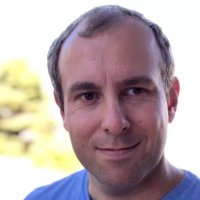
| 6 June 2023 Lukasz Kaiser (OpenAI): How Logic Shapes Transformers Lukasz Kaiser is a researcher at OpenAI, who works on fundamental aspects of deep learning and natural language processing. Prior to joining OpenAI, he was a Staff Research Scientist in the Google Brain team, where he co-designed state-of-the-art neural models for machine translation, parsing and other algorithmic and generative tasks and co-authored the TensorFlow system, the Tensor2Tensor and Trax libraries and the Transformer model, on which modern large language models such as ChatGPT are based. Before his position at Google, he was a tenured researcher at University Paris Diderot and worked on logic and automata theory. He received his PhD from RWTH Aachen in 2008 with a thesis on Logic and Games on Automatic Structures. Lecture by Lukasz Kaiser and Panel discussion on the role of logic in modern AI (panel includes Jan Broersen, Nina Gierasimczuk, Lukasz Kaiser) |
 |
| 31 May 2022 Joel David Hamkins (University of Notre Dame) Infinite games, frivolities of the gods Many familiar finite games admit natural infinitary analogues, which often highlight intriguing issues in infinite game theory. Shall we have a game of infinite chess? Or how about infinite draughts, infinite Hex, infinite Go, infinite Wordle, or infinite Sudoku? Let me introduce these games and use them to illustrate various fascinating concepts in the theory of infinite games. |
|
| 28 May 2021 Moshe Y. Vardi (Rice University) And Logic Begat Computer Science During the past fifty years there has been extensive, continuous, and growing interaction between logic and computer science. In fact, logic has been called "the calculus of computer science". The argument is that logic plays a fundamental role in computer science, similar to that played by calculus in the physical sciences and traditional engineering disciplines. [Read more ...] |
|